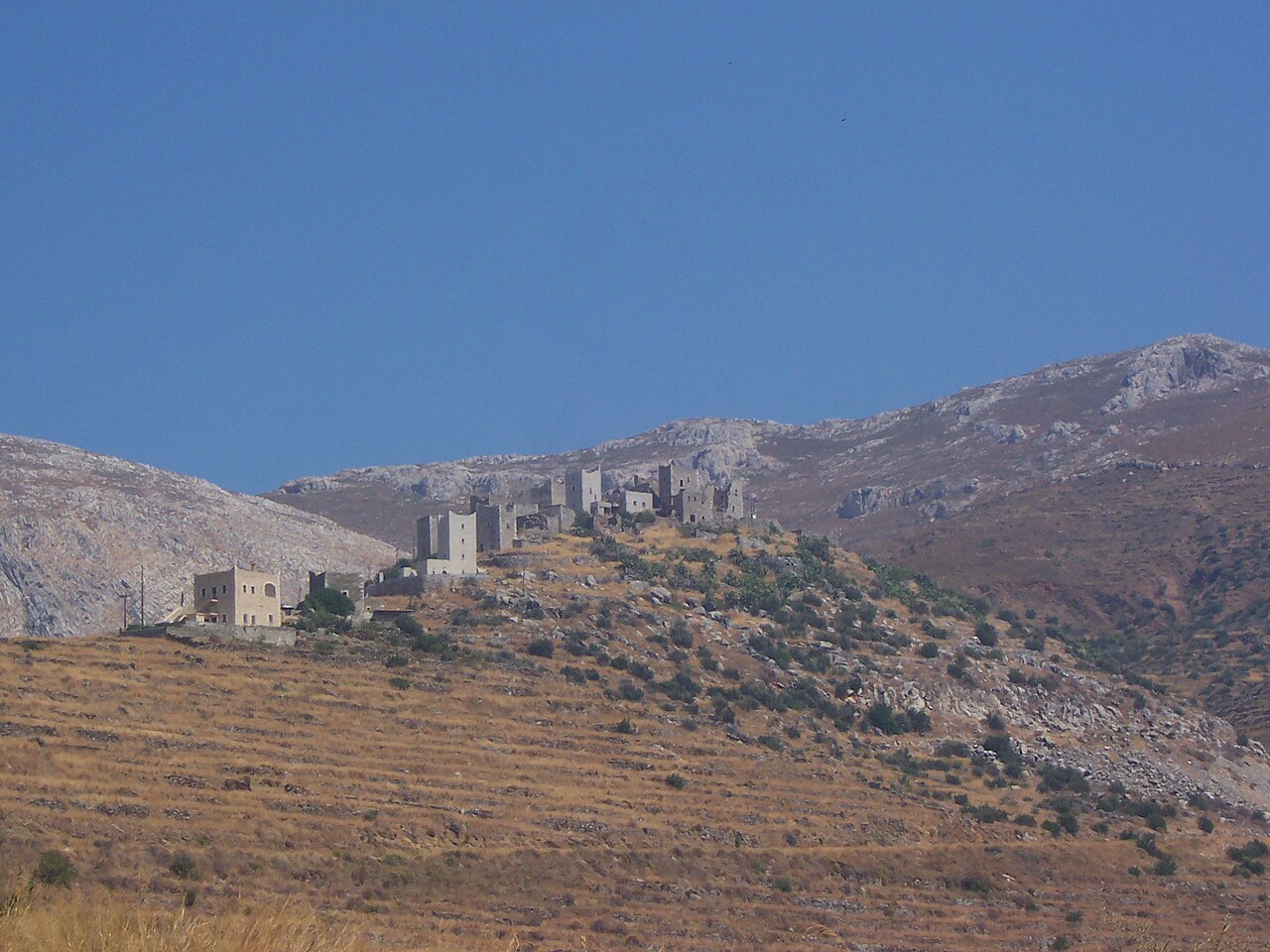
The question arrives at the same point every time: a traveller has a week in the Peloponnese, has read about the tower villages of the Mani and the ruined Byzantine city of Mystras, and wants to know which deserves the time. The honest answer is that they are not really competing attractions. Mystras is a single, dense archaeological site that can be seen properly in half a day. The Mani is a region, a peninsula of roughly 90 kilometres from Kalamata to Cape Tainaron, with feuding-tower villages, stone beaches and a coastline best read over two or three days. Comparing them fairly means being honest about what each one asks of you and what it gives back.
What Mystras actually offers
Mystras sits about 6 kilometres from modern Sparti, on the slopes of Mount Taygetos. It was the last capital of the Byzantine Despotate of the Morea, inhabited from the 13th century until the Ottomans and later the Venetians cycled through, and finally abandoned in the 19th century when its population was resettled in Sparti. What remains is a fortified hill city: a kastro at the summit, palace ruins, and a sequence of churches and monasteries with fresco cycles that rank among the best-preserved Byzantine painting in Greece. The Pantanassa convent, near the upper gate, is still inhabited by nuns, which gives the site a thread of continuity rather than pure ruin. Entry is a few euros, less for EU students and free on certain Sundays off-season (the schedule changes, so check the day's hours before planning around it). Walking the full site, lower town to kastro, takes 2.5 to 3.5 hours on uneven stone paths, and closed shoes matter more than they sound like they should.
What the Mani asks for in return
The Mani does not have a single gate and a ticket. It has Areopoli as an informal capital, a scatter of tower villages (Vathia being the most photographed), the Diros caves on the west coast, and Cape Tainaron at the very tip, where a lighthouse marks what classical geography called the entrance to Hades. None of these sit close enough together to see in one outing. A realistic first exposure is the drive from Areopoli down the Mani's inner spine to Vathia, the tower village at the end of the road, which alone is a half-day round trip with stops. Covering the peninsula properly, west coast villages, the caves, the southern tip, and at least one stone beach, is closer to a three-day loop that covers it all, or the tighter two-day road trip from Areopoli to the gate of Hades if time is short.
Distance and logistics between the two
Mystras and the Mani are roughly 90 to 100 kilometres apart by road, mostly via Sparti and down through the Taygetos foothills or around via Gythio, a drive of about 1.5 to 2 hours depending on the route and season. This matters because it means a same-day combination is physically possible but editorially rushed: you would see Mystras in the morning and arrive in the Mani with half a day left, enough for Areopoli and maybe Limeni, not enough for the south. If the trip originates in Athens rather than Sparti, the logistics shift again; the practicalities of getting south are covered in every way to make the journey from Athens to the Mani.
Mystras: one site, 2.5 to 4 hours including the drive from Sparti, best early morning before the stone paths heat up. The Mani: a whole peninsula, minimum two full days to see towers, caves and coastline without compressing them into a blur.
Matching the choice to the season
Mystras has shade from pines on parts of the upper paths but is largely exposed stone, and in July and August the climb to the kastro in midday heat is genuinely unpleasant; aim for opening time or the last two hours before closing. The Mani's exposure is different: its coast catches a reliable meltemi wind in summer that takes the edge off the heat near the water, but inland stretches and the drive to Vathia can still be punishing at midday. Spring (April to early June) and early autumn suit both regions better, with wildflowers around Mystras's lower slopes and calmer seas for anyone planning a boat tour of the Diros caves. A fuller breakdown of what each month brings to the peninsula is in the season-by-season guide to the Mani.
Doing both without shortchanging either
If the itinerary allows five or more days in Laconia, the sequence that works best in practice is Sparti and Mystras first (one night in or near Sparti is enough), then south into the Mani for a minimum of two nights, ideally three. This avoids the trap of treating the Mani as a day trip, which it is not built for: its character, the dry-stone towers, the silence of villages like Vathia, the stark light on the stone beaches, reveals itself slowly rather than at a single viewpoint. For accommodation choices once you are south, Areopoli, Limeni, Gerolimenas or a tower stay covers the realistic options and their trade-offs.
The honest verdict
Choose Mystras alone if your time in Laconia is a single day and your interest is Byzantine history and architecture rather than landscape. Choose the Mani alone if you have at least two days and want coastline, stone villages and a slower, more austere kind of travel, including the walk south to Cape Tainaron, Europe's mythic southern tip. Choose both only if you can give each its due: half a day for Mystras, a proper two to three days for the Mani. Treating them as equivalent half-day stops does a disservice to both.