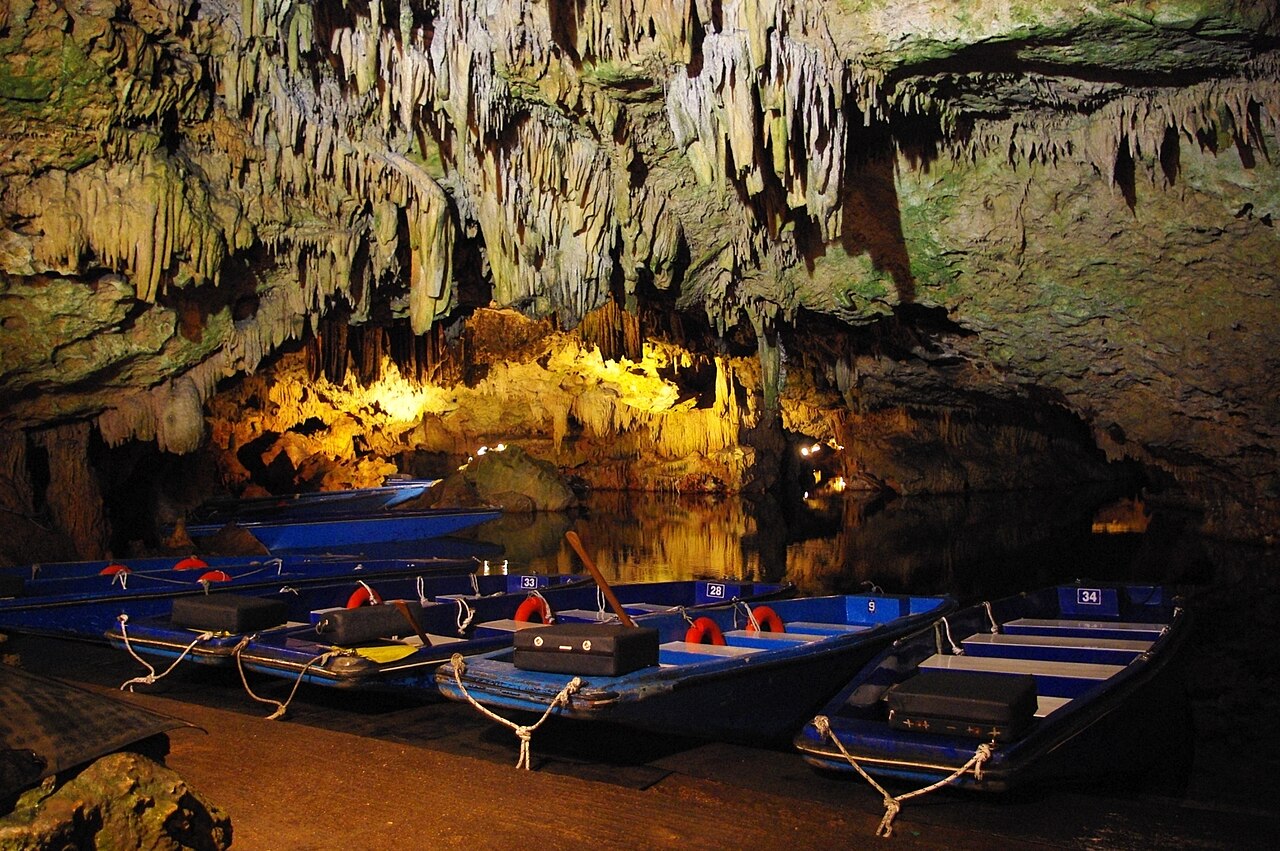
The Diros Caves (Spilaio Dirou, sometimes spelled Alepotrypa or Glyfada depending on which chamber is referenced) sit on the western coast of the Mani, roughly 10 minutes south of Areopoli by car. They are the peninsula's single most visited site, which is unusual for a region built on empty roads and silent tower villages. The appeal is specific: a underground river, navigable by small boat, running through chambers of stalactites that took thousands of years to form. The visit is short, around 25 to 30 minutes on the water, but the approach matters more than the ride itself.
Getting there and parking
The caves are signposted from the main Areopoli to Gytheio road, with a turn toward the coast near the village of Pyrgos Dirou. From Areopoli, allow 10 to 15 minutes by car, less by scooter. Parking is in a gravel lot beside the entrance building, free as of recent seasons, though it fills by mid-morning in July and August. Arriving before 10:00 usually means an easy spot; after 11:00, expect to park along the access road and walk a few minutes.
Opening hours and season
The caves typically operate daily from spring through autumn, with shorter hours or partial closures in deep winter (check the day's schedule locally, since hours shift by month and occasional maintenance closes the system for days at a time). High season (June to September) usually sees continuous operation from roughly 08:30 to 17:30, with the last boats departing before closing. Outside peak months, afternoon closures can come earlier, sometimes 15:00 or 16:00. Calling ahead or checking a posted schedule in Areopoli the evening before is worth the five minutes it takes.
Tickets and queueing tactics
Tickets are sold on site only, at a booth near the entrance, with no advance online booking at the time of writing. Expect an adult ticket in the range of 15 to 20 euros, with reduced rates for children and, at some periods, free entry for young children. Payment is typically cash-friendly though card machines are increasingly common. The real variable is the queue: boats carry a limited number of passengers (commonly around four to eight per boat), and on a August midday the wait can stretch past an hour. Arriving at opening time, or alternatively after 16:00 when day-trip buses have left, cuts the wait dramatically. Midday (12:00 to 14:00) is consistently the busiest window.
Bring a light jacket even in summer: the cave interior stays cool and damp year-round. Cameras are generally allowed but flash photography may be restricted to protect the formations, and large bags are sometimes left with staff before boarding.
What the boat ride involves
Visitors sit two or three to a bench in a flat, shallow boat poled or motored by a guide through a channel of clear, cold water. The ceiling drops low enough in places that taller passengers should duck. Lighting is minimal and strategic, placed to highlight columns and curtains of calcite rather than flood the space, so the atmosphere stays genuinely dim rather than staged. The ride covers roughly 1,200 metres of the mapped system before passengers disembark and walk a short dry section back to the entrance. Total time from boarding to exit is usually 25 to 30 minutes. There is no swimming, and children under a certain height or age (check at the booth) may be restricted for safety.
The Alepotrypa connection
A short walk or drive from the boat entrance leads to the Alepotrypa Cave museum and site, a separate dry cave that was inhabited and used for burial from the Neolithic period, roughly 6,000 years before present, until it was sealed by an earthquake. The museum displays pottery, tools and skeletal remains recovered from the site, and gives context that the boat ride alone does not: this coastline was settled long before the Spartans or the tower-building feuds that define the Mani's later history. Entry is a separate, modest ticket, and the museum keeps shorter hours than the caves themselves, often closing by early afternoon in shoulder season.
Combining the visit with the coast
Diros beach, a crescent of pale sand just below the caves, makes a logical follow-on: a swim after the cool, damp air of the cave interior is a common local sequence. Allow a full morning for caves plus Alepotrypa, then lunch in Pyrgos Dirou or back in Areopoli, 10 minutes north. Those continuing south toward Vathia and the Mani's southern tip should budget the Diros stop as a two to three hour detour, not a quick ten-minute photo stop: the queue alone can account for half that time in peak season.