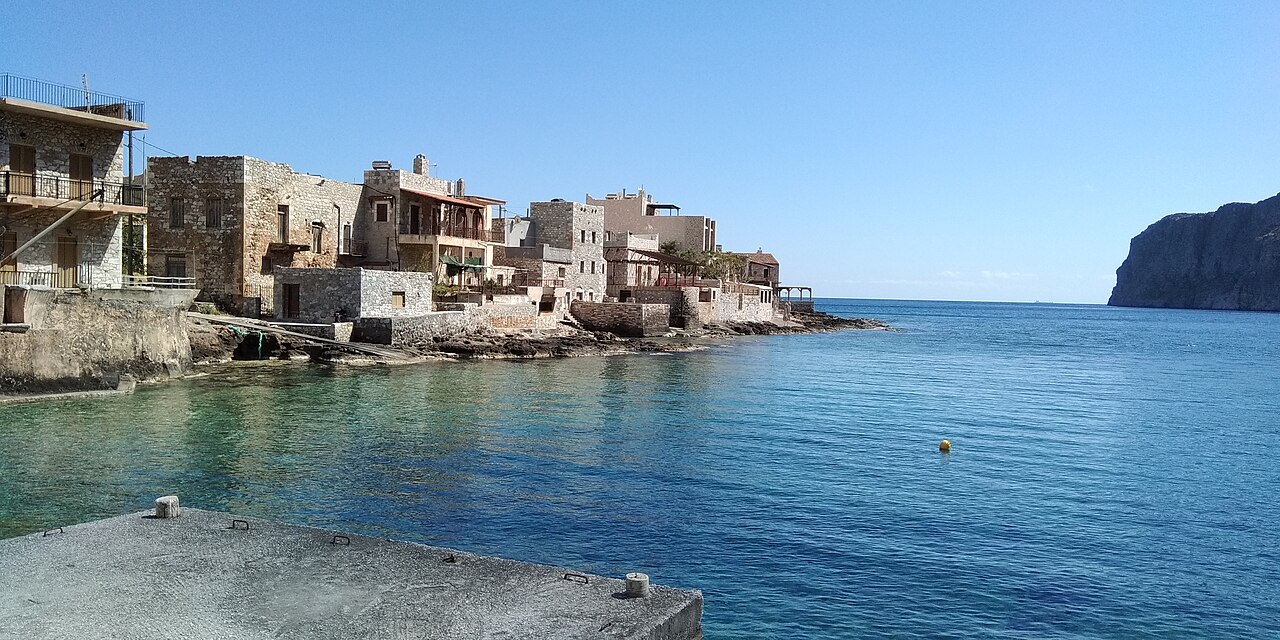
Gerolimenas sits at the bottom of the Mani peninsula, where the road finally runs out of excuses for hurrying. The village wraps around a natural harbour that has sheltered fishing boats since at least the nineteenth century, when it briefly flourished as a trading post for oil and silk. That prosperity faded within decades, leaving behind a tight cluster of stone warehouses and tower houses that now face the water in quiet, slightly crooked rows. There is no beach to speak of, no strip of souvenir shops, and that absence is exactly the point: Gerolimenas has become the anchor for travellers who want Inner Mani without the crowds that gather around Areopoli or Diros.
Getting there and getting your bearings
Gerolimenas lies roughly 20 kilometres south of Areopoli, a drive of about 30 to 35 minutes along a narrow but well-surfaced road that climbs and dips through a string of stone villages. There is no bus service worth planning around, so arriving by rental car is the realistic option, a point covered in more detail in the site's guide to getting around the Mani peninsula. The village itself is small enough to see on foot in under an hour: a single harbour-front lane, a few side alleys climbing toward the hills, and a scattering of stone houses converted into guesthouses. Parking is informal and free along the waterfront, though spaces thin out in July and August.
What there is to actually do
Gerolimenas rewards those who arrive without a checklist. The harbour itself, with its stone jetty and a handful of moored caiques, is the main attraction, best appreciated over a slow coffee rather than a rushed photo stop. Swimming is possible directly off the rocks near the harbour mouth, though the water here is deep and cool rather than the shallow turquoise of the Ionian coast. For a proper swim, most visitors drive 10 to 15 minutes to nearby pebble coves, a subject the site's ranking of the Mani's stone beaches covers honestly, including which ones have shade and which do not.
The real activity here is exploring outward. Vathia, the famous tower village perched on a ridge above the coast, is about 10 minutes by car and makes an essential half-day detour, detailed in the guide to Vathia's fortified tower houses. Further south, the road continues toward Cape Tainaron, Europe's mythic southern tip, roughly 45 minutes away by car followed by a walk; the full route is mapped out in the piece on walking to Cape Tainaron.
Golden hour here runs roughly 45 minutes before sunset. The low light catches the stone facades along the harbour and turns the water copper-gold; arrive early for a waterfront table if you want to watch it with a drink in hand.
Eating in a village with no menus to rush through
Gerolimenas has a small number of tavernas directly on the harbour, serving what the day's catch allows: grilled fish priced by weight (expect roughly 45 to 65 euros per kilo for larger fish, less for smaller varieties), alongside Maniot staples like syglino and wild greens. Portions are generous and service is unhurried, in keeping with the village's general pace. For context on what to order and why, the site's rundown of traditional Maniot dishes is worth reading before you sit down. Expect most places to close for the afternoon and reopen around 7pm; outside peak summer, some kitchens shut entirely on quieter weekdays, so it is worth checking ahead rather than assuming.
Where to stay
Accommodation in Gerolimenas is almost entirely in converted stone buildings: former warehouses and tower houses turned into small guesthouses, most with 8 to 15 rooms. There are no large resorts here, and that scale is deliberate; it keeps the village from becoming a stopover rather than a destination. Rooms with harbour views book up fast in July and August, often weeks ahead, while spring and autumn leave far more flexibility. For a comparison against the other main bases in the region, including Areopoli and Limeni, see the full guide to where to stay in the Mani.
When to visit
Late April through June and September through mid-October are the most comfortable windows: warm enough to swim, cool enough to walk, and without the parking crush of August. Winter brings a different, starker beauty, with rough seas against the harbour wall and most tavernas operating on reduced hours; the site's seasonal breakdown in Mani in winter explains what actually stays open. Whatever the season, Gerolimenas rarely feels crowded; even in peak summer, the village's small footprint caps how many people can be there at once.
Fitting Gerolimenas into a longer trip
Most visitors treat Gerolimenas as a base for one or two nights within a longer Mani itinerary rather than a standalone destination, and that is the right approach. It slots naturally into the classic south-bound route described in the two-day Mani road trip, or as the southern anchor of the more thorough three-day loop covering Inner Mani. Either way, budget at least one unhurried evening here: the kind where the plan is simply to sit by the water until the light goes.