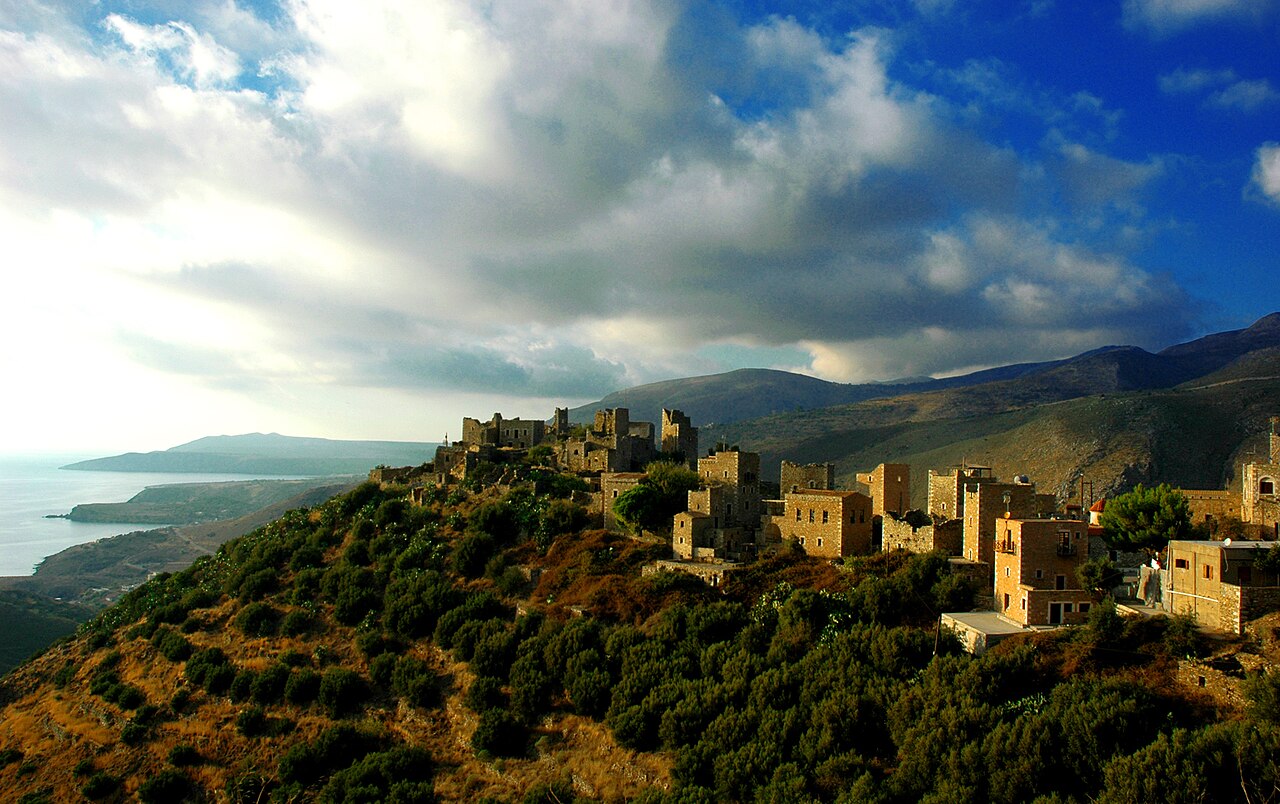
Ask anyone who has driven the coast road past Limeni whether the Mani is expensive, and the honest answer is: less than the Cyclades, more than a package resort on the mainland's flat side. There are no direct flights, no cruise-ship crowds pushing prices up, and no five-star compounds lining the water. What you pay for, mostly, is a car, fuel, a room with stone walls, and the kind of meals that are priced like someone's grandmother is still doing the cooking. Below are the real costs, broken down by category, with enough detail to build a sensible budget rather than guess at one.
Getting there and getting around
Most visitors reach the Mani by car from Athens, a drive of roughly three and a half to four and a half hours depending on which town you are aiming for. Car hire from Athens airport typically runs from about 35 to 60 euros a day for a small manual, more in July and August when demand from both tourists and Greeks returning for summer peaks. Fuel is the other fixed cost: expect to burn through roughly 50 to 70 euros in petrol for a full loop of the peninsula over several days, since distances here are short but roads are slow, counted in curves rather than kilometres. Full details on routes and timing are in our guide to every way to make the journey south. Public buses exist between larger towns but are infrequent and impractical for reaching towers and beaches, so budgeting for a car is close to mandatory.
Where to sleep: towers, rooms and the price gap between them
Accommodation is where the Mani can either stay cheap or tip into genuine expense, depending on what you choose. A simple double room in a family-run guesthouse in Areopoli or Gerolimenas runs from about 45 to 75 euros a night in shoulder season (April, May, October), rising to 70 to 120 euros in July and August. Converted tower houses, the region's signature stay, start around 90 euros for a basic restoration and climb past 200 euros a night for the better-known properties with sea views or private courtyards. Limeni's waterfront rooms sit at the higher end of that range. For a full comparison of where the money goes by village, see where to stay in the Mani, which breaks down Areopoli, Limeni, Gerolimenas and tower stays separately.
Booking in late April, May, or the first half of October typically cuts room rates by 30 to 40 percent compared with August, with the added benefit of empty beaches and manageable midday heat for walking.
Food: the one place the Mani stays genuinely affordable
Eating is the budget's best friend here. A taverna meal of grilled meat or fish, a Greek salad, bread and a carafe of local wine for two people typically comes to 25 to 35 euros, less in villages away from the main tourist stops. Coffee runs 2.50 to 3.50 euros, a bakery pie for breakfast is under 3 euros, and a bottle of decent local olive oil to take home costs 8 to 12 euros. Self-catering is easy if your tower or room has a kitchenette: a small supermarket shop for a few days of basics (bread, cheese, tomatoes, olives) rarely exceeds 20 euros per person. This is one of the few regions in Greece where eating out every night does not strain a modest budget.
Sights and activities: mostly free, a few paid exceptions
Much of what draws people to the Mani costs nothing. Walking through the tower village of Vathia, wandering the lanes of Areopoli, or driving the coast road at golden hour are all free. Beach access across the peninsula is open and unticketed, and the ranked rundown in the Mani's stone beaches, ranked honestly is useful for finding a good one without paying for a sunbed. The main paid attraction is the Diros Caves boat tour, which runs roughly 18 to 20 euros per adult depending on the season, with reduced rates for children; check the day's schedule since departures and duration shift with water levels. The hike to Cape Tainaron, covered in walking to Europe's southern tip, is entirely free beyond the petrol to reach the trailhead.
Sample daily budgets
A frugal traveller sharing a car and a basic room can expect to spend around 55 to 70 euros a day per person outside August: room (35), food (20), fuel share (10 to 15). A mid-range trip with a tower stay, two taverna meals, and the Diros boat tour lands closer to 90 to 120 euros per person per day. High summer pushes both figures up by 20 to 30 percent on accommodation alone, while fuel and food stay relatively stable year-round. Anyone planning a longer loop should also compare total costs against a focused two or three-day trip; our two-day Areopoli to the gate of Hades route and the longer three-day loop that covers it all both spell out what fits realistically into each timeframe, which helps avoid paying for nights you will not use well.
Where the money actually goes, and what to skip
If there is one category where visitors overspend without noticing, it is car hire add-ons: full insurance waivers and GPS rentals can add 15 to 20 euros a day for little real benefit if you already have a phone with offline maps. Conversely, the one place not to economise is the tower stay itself. These are the Mani's signature lodging, dry-stone and centuries old, and a night in one is as much a part of the trip as the drive to Vathia. Timing also matters: the season-by-season breakdown in when to go explains how August pricing and crowds compare with the quieter, cheaper months, and is worth reading before booking anything.